Reply to Ambassador's Investigation Report on OECD Complaint vs. Intex


10 February 2010


ARE-JOSTEIN NORHEIM
OECD-NCP, Norway
UTENRIKSDEPARTEMENTET
Oslo, Norway


Dear Mr. Norheim,

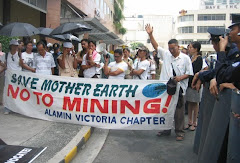
This is to submit our comment to the investigation report conducted by the Norwegian Ambassador to the Philippines, Knut Solem, regarding the complaint filed against Intex Resources ASA for violation of OECD Guidelines on Multinational Enterprises.

This submission is made in behalf of ALAMIN (Alyansa Laban sa Mina), a civil society federation of Oriental Mindoro, Philippines.

We understand that the OECD Guidelines were formulated to reinforce private efforts to define and implement responsible business conduct, particularly of companies operating outside their home countries. Adherence to the Guidelines is to be encouraged by their respective governments.

As such, we welcome the filing of complaint against Intex Resources ASA, a company operating in both provinces of Oriental and Occidental Mindoro, for allegedly violating OECD Guidelines pertaining to environment, human rights, corruption, compliance to local laws, indigenous rights, among others. We participated in the process by submitting our manifestation to the Norwegian NCP, Are-Jostein Norheim, thru our letter dated 6 November 2009. It is our position that the adverse environmental and social threats and impacts of the project violated the OECD Guidelines on several grounds, and therefore, the company should be made accountable and should not continue to take advantage of our country’s weak regulatory environment.

After more than a year after the complaint was filed, it then was forwarded to the Norway Ambassador to the Philippines for investigations as to the allegations raised in view of alleged violation of the Guidelines. The investigation report was recently released, which is now the subject of this comment.

The report, authored by the Honorable Ambassador Knut Solem and Ture Lundh, made it clear that their “primary task is to obtain points of view and then report these.” And they proposed to offer a brief summary of the various claims and points of views on the issue, based from their personal interviews and their short visit to Oriental Mindoro.

At the outset, we would like to register our objection to the process by which the investigation was conducted with clear bias and partiality to the company, selectively presenting the arguments of pro-mining groups, while undermining the crucial issues and contention of those who are opposing the mining project. To substantiate our assertion, here are our observations based from the report:


1. The report made it appear that the investigation was quite extensive, covering ten meetings with more than one hundred persons in attendance. But analysis of the report will reveal that most of the interviewees were selected, wittingly or unwittingly, from the supporters of the project. Three very long paragraphs (a total of 39 lines) reflects the allegations of Atty. Ben de los Reyes, spokesperson of Intex, detailing the alleged social acceptability, making incredulous claim for local support, claiming that the area is not a watershed, vilifying the lead oppositor as being paid in dollars! Other supporters of the project mentioned in the report include Mayor Apollo Ferraren of San Teodoro, Women’s Organization in Victoria led by Elena Evora, some Barangay counselors in Victoria, Mangyan groups of SADAKI and KABILOGAN, “non-Catholic” Christian Churches in Victoria, and Erlend Grimstad, Managing Director of Intex. Congressman Valencia and Mayor Leachon were reported to be reluctant supporters of the project, although both politicians already deny this allegation in public.

2. Close scrutiny will reveal that the report allotted only two paragraphs to anti-mining groups. The first one is a paragraph summarizing the points raised by ALAMIN (Alyansa Laban sa Mina), lumping together several trivial points, but neglecting more substantial issues raised during the dialogue. Another very short paragraph is found on the last page, averring Fr. Edu Gariguez as the “main opponent of the project,” and discussing his agenda for crafting far more restrictive mining regulations. Unfortunately, other relevant issues raised in dialogue and in written submission were sidetracked and not given space in the report.

3. The report failed to include other key stakeholders to the project who are strongly opposing it, including the political leaders of Victoria, Naujan, Socorro, and Calapan. Not even one member of the Provincial Council of Oriental Mindoro was interviewed or included as respondent to the investigation, and none also from the Municipal Council of the stakeholder municipalities, except the three pro-mining ones who were included in the report. The meeting with the Governor of Oriental Mindoro did not materialize due to conflict of schedule and the invitation for meeting was received in a very short notice.

4. The report only considered the position of pro-mining indigenous organizations of SADAKI and KABILOGAN, while neglected to also take into consideration the claim of bigger indigenous organizations (who are opposed to mining), SANAMA and KAMTI, who are the rightful owners of the certificate of ancestral domain claims (CADC), a big portions of which overlap with the mining tenement.


Given the lopsided selection of the interviewees, it is expected that the output of the investigation will reflect the assertions and arguments of the favored group, in this case, the pro-mining participants. The one or two paragraphs from the opposing group comprised only of a token representation and in no way can it outweigh the combined statements of the few but selected supporters of the mining company.

The most incontrovertible flaw of the investigation evidently displayed in the very text of the report is the unbalanced treatment of representative respondent-samples. Considering that there are two contending sides or claims, we expected the report to give fair or equal space to both parties concerned. But this basic principle of observing impartial representation was not observed. As it turned out, the report appeared to be merely a rehash of the mining propaganda and it failed to objectively assess the truthful claims or the allegations regarding the breach of the OECD Guidelines.

Aside from being partial, the investigation report came up with false and factual error in its effort to defend the company and to shield it from admitting any wrongdoing. In other instances, the report reiterated the position of the mining company, in complete disregard to the counter-arguments and contrary allegations of the opposing groups and the local government. The lists of these cases are many, but below are some blatant examples:

1. The investigation went as far as outrightly absolving the company from suspicion of corruption noting that: “The embassy has found no reason to suspect the company of being involved in corruption. None of those the embassy has met with accused or even suspected the company of having acted in a reprehensible way. At all the meetings – whether with opponents or supporters – the embassy had the clear and unambiguous impression that the company is considered to be "clean".

Such statement is very far from the truth! On the contrary, during the meeting at the Norwegian Embassy, I raised the issue of the alleged P2-Million “bribery” of the National Commission on the Indigenous Peoples (NCIP) and the P10-Million dike project in Brgy. Alcate, Victoria. Both cases smack the trend of anomalous transaction in exchange for the projection of social acceptability of the mining project. During the meeting at the Embassy, I remember enjoining the Ambassador to look into my submission for the details on these allegations. Clearly, it is not true that not even one respondent suspected Intex of engaging in corrupt transaction!

In the investigation report conducted by the National Commission on the Indigenous Peoples (NCIP), the indictment for inappropriate and highly irregular transaction was clearly articulated by the investigating team: “There is clearly a blatant disregard of, and failure to observe and comply with the procedure which, as a rule, is required in cases when non-NCIP resources are used to finance NCIP mandated and related activities or projects, such as delineation and titling application activities.”

This finding was submitted to the Ambassador, but it was not given any weight at all, and instead, he claims that no such allegation of corruption is raised at all and the company is considered “clean.”

2. The investigation report also asserted that “The embassy has no information suggesting that the company has violated Philippine legislation. Rather the opposite is true; there is much that indicates that the company is focused on complying with international and Philippine guidelines, rules and legislation.”

It is surprising that the report failed to note the very allegation contained in the OECD Complaint alleging that the company is violating Philippine laws, particularly, the Indigenous Peoples Rights Act of 1997 (in relation to observance of genuine free, prior and informed consent of the indigenous peoples) and the Local Government Code of 1991 (in relation to the moratorium ordinance). The complaint and our subsequent submissions attempted to extensively discuss this contravention of the Guidelines, but the investigation did not bother to even glance or take notice of our contention, simply dismissing our side by blanket denial of any violation by the company without any basis or serious inquiry into the issue.

The weak regulatory mechanism in the Philippine government is one of the reasons why even our laws are overturned just to please the foreign investors. The observation of the Ambassador is quite right, and on this comment we totally agree with him: “This is not the least important in a country such as the Philippines, where the authorities in general have run over, not to say disregarded, all opposition in their endeavour to obtain foreign investments and revenue.”

3. On the issue of the project’s social acceptability, the Ambassador’s report took the position of the company, believing its statement hook, line and sinker. And it explicitly concluded that “resistance to the project primarily appears to be found among those who are not directly touched or affected by the project.” And it follows therefore that the Future in Our Hands partners in the Philippines “do not appear to be representative of the elements of the local population.”

This line of argument is the company’s way of evading accountability by limiting the scope of the project’s impact to just a handful of communities who are recipient of their projects (the so-called corporate responsibility programs) and therefore supportive of the mining project.

KABILOGAN and SADAKI, being pro-mining Mangyan organizations, organized by the company, in cahoots with the National Commission on the Indigenous Peoples, represent only the minority of the stakeholders. The definition of “free and informed consent” according to Philippine law requires that a pre-requisite condition of “consensus of all members of the ICCs/IPs” should be obtained. The insignificant number of KABILOGAN and SADAKI is far from being such.

Moreover, the impact area of the project covers not just the small communities of the indigenous peoples but the entire watershed ecosystem of Oriental Mindoro. Since the mining concession covers one of the province’s actual watershed areas as duly declared and identified in its Provincial Physical Framework Plan, the Mindoro Nickel Project threatens the food security and ecological integrity of the province.

The strong opposition of the Mindoro population to the project had long been established through Municipal Resolutions of the affected communities and in many mobilizations attended by thousands of protesters. The attempt of the company to project a semblance of social acceptability through manipulated survey is objectionable. Intex surveys were marred by serious irregularity and deception. It was conducted by the company itself, with corresponding payment for the enumerators – P50 for each “yes” answer that they will get, and P20 for “no”.

Many respondents came forward to execute their affidavits or sworn statement questioning the process and the deception that they were subjected to. For example, a 68 year-old housewife confessed of having agreed to sign for “yes” because she was told by the enumerator that mining will guarantee a sure job for her unemployed husband. There were also cases of outright falsification of signatures, as in the case of a 30 year-old daughter who stayed in the hospital to take care of her father who suffered from stroke. When she arrived back in their village, she was surprised to learn that her name and her father’s were both signatories to the “yes” survey of Intex! But this was simply impossible not only because of their long absence, but also because her father was paralyzed and could not possibly sign!

4. Regarding the issue of determining whether the area is a critical watershed or not, the report considered it as “core issue.” However, the Ambassador begged off from taking a stand on it, allowing authorities to make expert evaluation on it.

But it is already a well-established fact that the mining concession of Intex is within the critical watershed of Oriental Mindoro. In fact, the Norwegian Agency for Development Cooperation (NORAD), in cooperation with Norwegian Water Resources and Energy Directorate (NVE) funded the project of the Provincial Government of Oriental Mindoro in drafting the Flood Control Master Plan for Bucayao and Mag-asawang Tubig Rivers. The mining concession of Intex Resources is undeniably located within the catchment of the said watershed area.

Supposedly, the established principle of “responsible mining” requires that mining companies should not encroach on watershed areas where social and environmental impacts are very high. The so called “NO GO ZONES” for mining include areas considered as conservation priorities, zones of social conflict, ancestral domains of the indigenous peoples, biodiversity areas, typhoon and earthquake prone areas, among others. Mindoro has all of the above features making it truly a critically threatened island ecosystem.
5. With regard to the legal effect of the mining moratorium, the investigation report insisted that it is not covered by the moratorium since its permit was signed earlier before the ordinance on moratorium was enacted in 2002, therefore it cannot be valid for a law cannot be retroactive in its application. But it should be noted that there is only one Mining Permit that was approved on December 7, 2000, and that is MPSA No. 167-2000-IV, covering only an area of 2,290.6713 hectares.

Intex has other mining application, AMA No. IVB-97, located in Barangay Villa Cerveza, Municipality of Victoria. This is undeniably covered by the moratorium ordinance of Oriental Mindoro since it was only recently approved. Intex has other applications under the jurisdiction of Barangays Pag-asa and San Agustin, Municipality of Sablayan, Occidental Mindoro, namely, AMA No. IVB-101 and AMA No. IVB-103. These areas are also covered by the same prohibition on mining because the Municipality of Sablayan had also passed General Ordinance No. 2007-GO03B declaring a 25-year moratorium on large-scale mining activities within their municipality.

6. The report failed to consider independent studies submitted for its reference to assess the matter more professionally. One research work we recommended was the case study conducted by the Philippine Social Science Council (PSSC) in partnership with the United Nations Development Program (UNDP) in Victoria, Oriental Mindoro. The study attests to the fact that at present, it is mining that is given priority, and the processing of mining permits is given higher priority over the issuance of the indigenous peoples’ title or claim for their ancestral domain.

The other reference document is the study by Robert Goodland & Clive Wicks, Philippines: Mining or Food?. In the said research, it was noted that: “Mining is likely to damage the island’s (Mindoro’s) important food production capacity, its fisheries and its eco-tourism potential and is clearly inconsistent with its sustainable development plan. In the light of other factors, including seismic and climatic conditions, the proposed Intex Nickel project has the potential to cause massive damage for the water catchment area, impacting up to 40,000 hectares of rice producing lands and exasperating flooding of towns and villages.”

There are more inconsistencies, inaccuracies and imprecise assessment of facts, including lapses in terms of ensuring partial evaluation of the data and allegations pertaining to the investigation conducted by the Norwegian Ambassador on Intex Resources case.

We deem that the report investigation is biased and incomplete, and does not reflect the actual reality in Mindoro vis-à-vis the compliance of Intex to the international standard of corporate & ethical responsibility as provided in OECD Guidelines. We believe that the case of Intex in Mindoro is a classic challenge of how the OECD Guidelines can be implemented when “there is an endemic conflict between the goals of corporate profit maximization and those of human rights protection and social development.”


Very truly yours,


Edwin A. Gariguez
ALAMIN, 2/F Patria Bldg., Sto. Nino Cathedral
Calapan City, Oriental Mindoro, Philippines


IMPORTANT ANNOUNCEMENT TO FOLLOWERS OF THIS BLOG SITE


This is Fr. Edu Gariguez signing off indefinitely from keeping this blog going.

We are now on the 7th day of our Hunger Strike, and the grueling experience of not taking solid food is taking its toll on me personally, and I am starting to feel weakening of my body functions. Hence, I will not be able to update this site.

Many hunger strikers have crossed the threshold of pain that they can endure, and many have given up.

But there are four of us who are determined to continue until the illegal ECC is cancelled. And we will settle for no less!

Please keep praying for us.


HUNGER STRIKER RUSHED TO HOSPITAL, GR0UPS DENOUNCE ATIENZA’S CONTINUING INACTION ON CANCELLATION OF INTEX ECC IN MINDORO


One of the twenty-six Mindorenos who went on a hunger strike last week in front of the Department of Environment and Natural Resources (DENR) central office in Quezon City had been rushed to the East Avenue Medical Center, at around 8 p.m. Saturday, after suffering locked jaws and cold sweats.

Edgardo Cruzado, 38, community leader from Kapulungan Para sa Lupaing NInuno – KPLN (Organization of Seven Tribes), was brought to East Avenue Medical Center at 9 p.m., Saturday where he was examined, given dextrose and was placed under observation. He was discharged at 4:30 a.m. Sunday and joined the camp again. He remains with the group, despite the medical order to stop his hunger strike. KPLN is organization of Mangyan communities from Oriental Mindoro

Cruzado is a widower with five children. His main livelihood is farming in Oriental Mindoro, and is a member of the Tadyawan tribe that holds an ancestral domain land certificate (CADC-086) in the mining-affected area.

The Mindorenos decided to go continue their hunger strike after DENR Sec. Atienza merely issued a letter to mining company Intex Resources Philippines, informing them that their ECC Is suspended for 90 days, pending submission of additional documents.
Atienza issued the suspension letter canceling the ECC after a dialogue last Nov. 18 with local government officials and civil society organizations from the two Mindoro provinces. The delegation was led by two governors, two bishops and a host of community leaders representing indigenous peoples, farmers and women from Mindoro
“We decided to rush him to the hospital after he complained of dizziness”, said Jonjon Sarmiento of Alyansa Laban sa Mina (ALAMIN), the broad alliance anti-mining groups in Mindoro. He added that they got worried after Cruzado’s face felt very cold.

“We will hold Secretary Atienza personally responsible for whatever happens to the hunger strikers. He is using the sham suspension letter as an excuse not to cancel the ECC. He is again raising the issue of local autonomy, and the responsibility of local officials and communities to oppose the mining in their localities. He has missed the fact that all legal and extra-legal measures have been exhausted by the Mindorenos to oppose the entry of Intex, and yet he still signed the ECC, even under questionable circumstances. The real issue here now is whether or not Atienza wants to uphold the law,” said Mangyan Mission Coordinator Fr. Edu Gariguez.

He said that the ECC was signed by Atienza despite the absence of consultations among communities, and the lack of permission of LGUs as stated under the Mining Act and the Local Government Code.

“The local governments and the people have withdrawn their consent and launched mobilizations against Intex, but these have been disregarded, both the mining company and the DENR”, Gariguez added.

Alyansa TIgil Mina (ATM) condemned the continuing callousness of Atienza and DENR officials on their inaction on the demand of the hungers strikers, saying that there seems to be a lack of genuine leadership and commitment to resolve the matter, as the election mode grips the department.

ATM National Coordinator Jaybee Garganera also denounced Atienza’s insensitivity, saying the DENR secretary continues to ignore the Mindorenos despite their hunger strike.

“He had only met the group once, and only after being pressured with the presence of high-level personalities such as the governors, congressional representatives and bishops from Mindoro. He had never tried to face the group but had all the time and energy to host Manny Pacquiao in his triumphant return,” said Garganera.

“We, in ATM, strongly support the fight of the Mindoreños against Intex Resources and we intend to continue providing all forms of assistance to these communities and groups that have strongly aired their resistance and decisions to stop the entry of mining operations that continuously threatens environmental sustainability and most especially lives of Filipino people," concluded Garganera.

Father Robert Reyes, known as the “running priest,” continued his solidarity fasting for the group and gave out rosaries to the hunger strikers yesterday. He called on Atienza to heed the hunger strikers’ just demand. During the reflection session with the hunger strikers, he said “If anything happens to these people, the mining companies and DENR Secretary Atienza will have blood in their hands. This is not simply about land anymore, but about justice and sharing what God had given to us. Sustainable development and genuine local autonomy, if it will succeed in this case of resistance of local people against mining, will mean peace, justice and no more lying without end. Respect the decision of these indigenous peoples and the LGUs of MIndoro, Mr. Atienza.”

The group in hunger strike, together with the local government officials of Oriental and Occidental Mindoro, Catholic Church leaders, civil society organizations and individuals from the communities affected the project calls for the immediate revocation of INTEX ECC and demand the DENR to respect the LGUs’ mining moratorium in their respective provinces.

The Alyansa Tigil Mina (ATM), an advocacy group and a people’s movement that upholds the rights of the present and future Filipinos against the persisting injustices related to mining. ATM is an alliance of mining-affected communities and their support groups of NGOs/POs and other civil society organizations convened by HARIBON, Legal Rights and Natural Resources Center – Friends of the Earth Philippines (LRC/FOEI) and PhilDHRRA. —(30)


HUNGER STRIKERS WEAKEN, BUT GROW MORE RESOLVED – CHALLENGE “PRO-LIFE” ATIENZA FOR HIS INACTION


Hunger strikers from Mindoro expressed their anxiety over their physical conditions as they enter the sixth day of their hunger strike in front of the DENR here in Quezon City. This developed as one of them, Edgardo Cruzado, 38, was rushed to the hospital last night, and after medical attention, was ordered by doctors to take a light meal of bread.

Librada Isidro, community facilitator from Mangyan Mission and one of the leaders of the hunger strike, echoed the sentiments of the hunger strikers. “Nag-aalala kami at nalulungkot sa nangyari sa aming kasamahan. Nahilo siya at nanghina at umabot siya sa ganitong sitwasyon dahil patuloy na di kami pinapakinggan ni Sec. Atienza.” (We are worried and sad with what happened to one of us. He felt dizzy and weak, since we have reached this point, because Sec. Atienza still refuses to listen to us.)

She confirmed that growing anxiety of the hunger strikers, saying that “kami po ay lubhang nangangamba sa maaaring mangyari sa Pilipinas, lalo na sa isla ng Mindoro, dahil sa kagustuhan niyang magpatuloy ang pag-mimina. Hindi man lang naiisip ni Sec. Atienza ang mga sakripisyo at paghihirap ng mga tao dito sa hunger strike.” (We are fearful of what may happen to the Philippines and to the island of MIndoro, because of his consent for mining to continue. It didn’t occur to Sec. Atienza what our sacrifices and hardships mean with this hunger strike.)

Isidro echoed their call for Atienza, saying “sana po, ang gagawin sa kalikasan ay pangalagaan at proteksyonan, at alagaan ang mga Mangyang nakatira sa Mindoro. Pero bilang namumuno sa DENR, ay hindi naaangkop ang kanyang pananaw at gawain sa pagpapaunlad ng kalikasan” (We hope that he will protect and conserve the environment, and also look over the welfare of the Mangyans. But as DENR head, he has displayed inappropriate views and behavior for environmental management.)

In a radio interview Saturday afternoon, Atienza said that he can’t do anything about the hunger strike, and called on the group to break their camp, so that discussions can move forward including an investigation of the case so that accountabilities can be determined. He also hinted that legal actions against the appropriate people or agencies could be possible.

Segundo Kalignayan, 46, another hunger striker, admitted that they were hurting both physically and emotionally with the hisptalization of their colleague. “Masakit sa amin na ang isa naming kasamahan ay naospital, dahil kailangan naming ipagpatuloy ang aming hunger strike” (It pains me that one of us ws hospitalized, because we are forced to continue with our hunger strike.) Kalignayan is President of Samahang Nagkakaisang Mangyang Alangan (SANAMA, Inc.). He appealed to Atienza to take a closer look at their plight saying “Maawa namam po kayo sa mga katutubo, pato na rin sa lahat ng mga taga-Mindoro. Naniniwala kami na hindi akma ang pagmimina sa inyong mga lupain” (Please have mercy on our indigenous friends, and all the people of Mindoro. We all believe that mining is not good for us and for our lands).

Meanwhile, farmer-leader Nick Tumaca, 49, expressed mixed feelings with their situation. “Hindi lang lungkot pati awa sa laki ng sakripisyo na ginagawa ng mga strikers. Talagang natatakot din ako dahil lumalapit kami sa punto na baka may mamatay sa amin.” (Not only distressed, I also feel pitiful for all of us hunger strikers. I am also starting to be afraid as we are nearing that point where someone from us might die), he added. He is concerned that it is possible that their numbers may dwindle in the coming days, and that their strength physically and emotionally will continue to decline. He demanded from Atienza to sincerely talk with them and listen to their demands, and to stop punishing the hunger-strikers by delaying the cancellation of the ECC of Intex. Tumaca is a rice-farmer in Oriental Oriental Mindoro. He is the Chairman of Samahang Lakas ng mga Mangignisda at Magsasak sa Lalawigan ng Silangan Mindoro (SALAKMMA).

Supporters of the hunger strike challenged Atienza to leave up to his claims of being a “pro-life” leader. Jonjon Sarmiento from ALAMIN said that the treat of death faces each and everyone of the hunger strikers, and that Atienza must act decisively on the ECC cancellation as soon as possible. Alyansa Laban sa Mina (ALAMIN) was established in 1999 to consolidate opposition to the Mindoro Nickel Project. The alliance has conducted numerous local and national mobilizations and International campaigns were also done in Europe.

The group in hunger strike, together with the local government officials of Oriental and Occidental Mindoro, Catholic Church leaders, civil society organizations and individuals from the communities affected the project calls for the immediate revocation of INTEX ECC and demand the DENR to respect the LGUs’ mining moratorium in their respective provinces.

The Alyansa Tigil Mina (ATM), an advocacy group and a people’s movement that upholds the rights of the present and future Filipinos against the persisting injustices related to mining. ATM is an alliance of mining-affected communities and their support groups of NGOs/POs and other civil society organizations convened by HARIBON, Legal Rights and Natural Resources Center – Friends of the Earth Philippines (LRC/FOEI) and PhilDHRRA. —(30)


For more information:
Fr. Edwin A. Gariguez, ALAMIN, (0919) 8005595, edugariguez@gmail.com, http://earthjedi.blogspot.com/
Jeff Rafa, ALAMIN (0918) 9443561 / Jaybee Garganera, ATM Coordinator, (0915) 315.37.19
Jonjon Sarmiento, ALAMIN (0926) 230.32.05
Roslyn Arayata, ATM Policy Officer (0917) 521.7937


MANGYANS TO PRESS HUNGER STRIKE


by Alcuin Papa and Riza T. Olchondra
Philippine Daily Inquirer, November 20 2009 page A2

SOME 25 HUNGER STRIKERS, most of them members of the Mangyan tribe, vowed yesterday to continue their protest in front of the Department of Environment and Natural Resources (DENR) central office in Quezon City to press for the cancellation of a big mining project on Mindoro island.

Fr. Edu Gariguez of Mangyan Mission, one of the strikers, said the participants, 16 of them Mangyans, decided on Wednesday evening to continue with their hunger strike even after Environment Secretary Lito Atienza suspended earlier that aternoon the environmental compliance certificate (ECC) that was issued to Norwegian mining firm Intex Resources on October 14.

Jubilation fades

Gariguez said their jubilation over the suspension faded after they studied Atienza's order.

“The suspension only covers 90 days. We want the project cancelled. It also gives Intex the opportunity to submit the documents needed. It left the decision for the continuation of the project in the hands of the DENR. It might still decide in favor of Intex. So this is not yet finished,” Gariguez told reporters.

Atienza had ordered the suspension of Intex's ECC for 90 days during which time the mining firm was directed to submit documentation that it conducted public consultations on the project.

Gariguez said “no meaningful public consultations” on the project occurred.

“We want a cancellation of the project. It is clear Mindoro residents are opposed to the project. It did not go through the proper process,” said Nick Tumaca, a farmer leader.

Lives at stake

Mangyan leader Badang Isidro said members of her tribe “would die if the ECC is given. We will lose our lives, our livelihood. As Mangyans, we value nature and the environment.”

Gariguez showed reporters the results of a recent study conducted by a seven-man Environmental Impact Assessment Review Committee (EIARC) of the Mindoro Nickel Project.

Intex said it was still keen on continuing with the project even after its ECC was suspended.

“First of all, we're not yet mining the site. We're studying it. There might be a misconception that we are already mining,” said Jake foronda, Intex's Mindoro nickel project manager.

Foronda said Intex still aimed to complete its feasibility study on the project. “We expect the feasibility studyt to be finished around February,” he added.

He told the Inquirer that Intex went through the process of consultations and getting the necessary permits to study the potential mine site.

Contrary to the claim of local residents, he said the site did not sit on a critical watershed.


25 MINDORO HUNGER STRIKERS NOT GOING HOME YET


INQUIRER.net
First Posted 20:52:00 11/18/2009

http://newsinfo.inquirer.net/breakingnews/nation/view/20091118-237059/25-Mindoro-hunger-strikers-not-going-home-yet


MANILA, Philippines—The 25 hunger strikers from Mindoro are not going home just yet.
This despite the order made by Environment Secretary Lito Atienza Wednesday suspending the environmental clearance he issued to Intex Resources to mine 11,216.6 hectares of land in Mindoro, the Alyansa Laban sa Mina (ALAMIN, Alliance Against Mining) said.

Some critical agreements made during the dialogue with Atienza were not contained in the order the former Manila mayor issued after meeting with protesters, the alliance told INQUIRER.net in a text message.

For this reason, the hunger strike of 25 Mindoreños, mostly Mangyans, will continue, the alliance said.

Oriental Mindoro Vice Governor Estela Aceron said the local governments of Mindoro were stressing their opposition to large scale mining on the island.

“We are reiterating our position that mining is not welcome in Mindoro. We expect Secretary Atienza to respect this,” Aceron said.

Oriental Mindoro has passed a 25-year mining moratorium ordinance in 2002 prohibiting the entry of all large-scale mining in the province. In Occidental Mindoro, similar mining moratorium ordinances were passed by the municipal governments of Sablayan, Abra de Ilog, Paluan, Looc and Lubang. Eight out of 11 municipalities in Occidental Mindoro passed a resolution against the mining project.

Aceron, who was with the group that met with Atienza Wednesday afternoon, said the environment chief was in effect admitting he issued the environmental compliance certificate to Intex although the Norwegian firm has yet to comply with all the requirements needed before the mining clearance could be issued.

“I’m disappointed that Secretary Atienza issued the ECC on October 14 even without the required documents at hand,” she said.

She said that during the dialogue Atienza expressed his dismay on learning that there was no prior consultation made with the local governments and the affected communities.

Aceron said that Atienza even agreed that a committee be formed—composed of environment officials and local government executives—to look into the issues raised during the dialogue.

But this is never contained in the order Atienza released later, she said.
“We are really disappointed with his order of suspension. We understand that he is resigning before filing his certificate of candidacy so we want an answer before he leaves the office,” she said.

Atienza has hinted at his comeback bid in Manila politics where he served as mayor from 1998 to 2007.

Local officials on the island of Mindoro had opposed the project saying their sentiments had been disregarded and the issuance of the ECC was “irregular” and violated a moratorium on mining on the island.

They also said it would displace around 20,000 members of indigenous tribes, affect the agricultural output and food security of the island and threaten conservation areas of the Philippine Tamaraw and tourist spots like the popular Puerto Galera beach.

Twenty-five members of indigenous tribes, priests and residents of the island started a hunger strike Tuesday to dramatize their opposition to the project. With Alcuin Papa, Philippine Daily Inquirer


SAVE MINDORO Campaign Schedule


MINDORO CAMPAIGN TO SAVE AND PROTECT OUR ISLAND PROVINCE
AGAINST LARGE-SCALE MINING PROJECTS

Schedule of Activities for the First 4 Days of Hunger Strike


NOVEMBER 16, MONDAY: (CALAPAN, ORIENTAL MINDORO)
• 3:00 PM – Assembly at Capitol Square, Calapan City, send off rally for the Hunger Strikers
• 4:00 PM – Prayer Rally and Protest March from Capitol to Sto. Nino Cathedral
• 5:00 PM – Holy Mass and Prayers for the DENR Campaign

NOVEMBER 17, TUESDAY: (FROM CALAPAN TO DENR OFFICE, QUEZON CITY)
• 5:00 AM – Mindoro delegation’s departure from Calapan to Batangas
• 6:00 AM – Arrival in Batangas, travel to Manila
• 9:00 AM – Fr. Robert Reyes to pitch the Kubol ng Pag-asa at the DENR
• 9:30 AM – Arrival at Malcolm Hall, College of Law, UP Diliman
• 10:30 AM – Courtesy Call: QC Mayor Belmonte
• 11:00 AM – Setting up of Camp in front of DENR Office/Press Con
• 12:00 Noon – Start of the Hunger Strike

• 1:00 PM – Celebration of the Holy Eucharist (Mindoro Clergy)
• 2:00 PM – Reading of Pastoral Letter of Bishop Cajandig, Holy Rosary
• 3:00 PM – Delegation to proceed to Congress
• 4:00 PM – Privileged Speech of Cong. Osabel on Mindoro Mining

NOVEMBER 18, WEDNESDAY: (DENR OFFICE, VISAYAS AVE., DILIMAN, QC)
• Continuation of the Hunger Strike
• Arrival of main contingent from the Local Government Units (Oriental and Occidental Mindoro)
• 10:00 AM – Press Conference in front of the DENR (Mindoro LGUs and Bishops)
• 11:00 AM – Start of Program, Reading Solidarity Statements, Seminarians’ Presentations
• 2:00 PM – Holy Mass (Bishop Palang, Bishop Cajandig, Bishop Utleg and Bishop Pabillo)

NOVEMBER 19, THURSDAY: (DENR OFFICE, VISAYAS AVE., DILIMAN, QC)
• Continuation of the Hunger Strike
• UCCP and other Protestant Churches’ Delegation


Nota Bene:
Activities that follow are still to be finalized with the support groups from Manila: Alyansa Tigil Mina (ATM) and Legal Rights and Natural Resources Center (LRC-KsK), PMP and other networks.

For details and inquiries, please contact:

Fr. Edu A. Gariguez
Mobile Phone: 09198005595
Email: edugariguez@gmail.com
Blogsite: http://earthjedi.blogspot.com


MANGYANS, PRIESTS PROTEST MINING PROJECT


By Ma. Ceres P. Doyo
Philippine Daily Inquirer
First Posted 21:04:00 11/13/2009

http://newsinfo.inquirer.net/breakingnews/nation/view/20091113-236033/Mangyans-priests-protest-mining-project

MANILA, Philippines—Mangyans and priests, supported by bishops, are taking their protest to Metro Manila and will go on an indefinite hunger strike beginning next week to protest mining operations that they fear will destroy a contiguous watershed area in Oriental Mindoro.

Twenty-five hunger strikers, including 16 Mangyans and two priests, will stage their protest on November 17 in front of the Department of Environment and Natural Resources central office on Visayas Avenue in Quezon City.

Bishop Warlito I. Cajandig of the apostolic vicariate of Calapan has issued a statement condemning the large-scale mining of Norwegian company Intex Resources and repeatedly calling it “irresponsible.”

Cajandig has also issued a call, through the Diocesan Commission on Service, asking for the support of priests, religious, seminarians, students, lay and all people of goodwill “to pray and join in the campaign against mining in Mindoro.”

Three bishops will join Cajandig at a Mass at the protest site on November 18. They are Bishop Antonio Palang of the vicariate of San Jose, Mindoro, Laoag Bishop Sergio Utleg, head of the Catholic Bishops’ Conference of the Philippines’ (CBCP) Commission on Indigenous Peoples and Manila auxiliary bishop Broderick Pabillo.

The Norwegian mining project, which will cover 11,218 hectares, is said to be within the ancestral domain claim of the Alangan and Tadyawan indigenous Mangyan communities.

According to the Ateneo-based Simbayang Lingkod Bayan, “the large scale mining operations of Intex Resources may bring about the destruction of a contiguous watershed and that can lead to the displacement of several indigenous Mangyan communities in Oriental Mindoro.”

The mining project will span four towns—Victoria, Pola and Socorro in Oriental Mindoro and Sablayan in Occidental Mindoro. It is expected to produce 100 million-120 million tons of ore over a period of 15-20 years. Mindoro’s nickel laterite deposit is believed to be one of the biggest in the world.

SLB said the people of Mindoro are furious with the DENR’s approval of Environmental Compliance Certificate for the operation of the nickel project by Intex Resources. The ECC was issued last October 14 by Environment Secretary Lito Atienza despite strong and valid opposition from the community, the local government and the church.

The national anti-mining network Alyansa Tigil Mina (ATM, Alliance to Stop Mining) had earlier called for Atienza’s ouster, saying the former Manila mayor committed “dreadful acts” when he approved the project. Intex, on the other hand, had said the protesters had failed to present their arguments during the public hearings.

Oriental Mindoro has ordered a 25-year moratorium against large-scale mining while the municipal council of Sablayan and the town’s 22 villages separately issued resolutions opposing the “environmentally destructive mining project.”


Furious about Environmental Authorisation on Mindoro


NEWS REPORT FROM FRANTIDEN I VARE HENDER OF OSLO, ENGLISH TRANSLATION

Intex Resources has received environmental authorisation for its nickel project on Mindoro. The central authorities on the Philippines have thereby run over the local authorities, which are strongly opposed to the mining project. A large-scale hunger strike is now planned to be staged in front of the Department of Environment and Natural Resources.

By Pia A. Gaarder
Norwatch

Published in English 4 november 2009

On 14 October the Secretary of the Environment and Mining, Jose L. Atienza, signed the environmental authorisation – Environmental Compliance Certificate (ECC) – for Intex Resources’ nickel project on the Philippines.

– We are very pleased that this long and thorough process has finally led to the issuance of the ECC for Mindoro Nickel by Secretary Atienza. One of the most important milestones for this project has now been achieved, Erlend Grimstad, CEO of the Norwegian company Intex Resources wrote in a press release.

But not everyone is as happy as Intex’s leader. On the contrary. The whole project has met with strong opposition from the provincial governors of Mindoro, great part of the local population, the church, and NGOs. There are strong indications that this resistance will now be escalated.

The organisation Alamin has given notice of an extensive hunger strike starting on 17November. The demonstration will take place in front of the Department of Environment and Natural Resources in the former capital, Quezon City, where several government buildings are located. The goal is to force the government to withdraw the environmental authorisation. In practice, the environmental authorisation constitutes the starting point for the interventions in the area.

OECD Complaint
The environmental authorisation for the nickel project was issued before final hearing of the complaint against Intex Resources which The Future in Our Hands has sent to the national contact point for the OECD’s guidelines for multinational companies. The authorisation has thus been issued before the new evaluation of the case, which, from what Norwatch has learned, Norway’s new ambassador in Manila, Knut Solem, will carry out as a part of the appeal.

In October of 2007 Norway’s ambassador to the Philippines at that time, Torstein Ståle Risa, visited the island of Mindoro. Intex Resources, which was then called Crew Minerals, was already in the process of carrying out test drills. The goal of Risa’s visit was, among other things, to examine how the local population felt about Norway’s gigantic plans. The trip came about after the Norwegian Broadcasting System’s TV News, in collaboration with Norwatch, raised the issue on 23 September that year. It was of special concern that the local population’s leaders had signed the contract with their fingerprints and that the indigenous population had been tricked with a little rice. Risa was able to confirm, among other things, the great local opposition to the project.

Moratorium Overturned
In 2002 the province of Mindoro instituted a 25-year moratorium against any form of mining operation on the island, and Intex’s test drills for nickel were thus at variance with the local legislation. But the central authorities did not endorse the province’s resolution.

Food security and possible great environmental damage are the main reasons for the local authorities’ opposition to the open-cut nickel mine. The concession area for the mining operations is located in an environmentally vulnerable area, with a watershed that is important for four large rivers. These supply water for 70% of the provinces’ rice fields and fruit plantations. Pollution of these rivers would affect farmers in the lowlands. Local politicians are therefore extremely concerned about the long-term effects on agricultural areas and food production on Mindoro. The possible mining area overlaps in addition the area of the Mangyan indigenous population, where the Alangan and Tadyawan tribes are most strongly affected.

– Mining operations in watersheds is prohibited according to Philippine legislation. If we get large-scale mining operations in this area, it will intensify the flooding problem in our province. It will create great problems for our population and for the important agricultural areas here, Governor Arnan Panaligan told us when Norwatch visited the area in the summer of 2007.

Mindoro is known as “Manila’s food supplier”, and large floods have previously destroyed entire crops on the island.

Intex Resources believes that everything in the process up until the environmental authorisation has proceeded correctly:

– This process has taken over a year, and has consisted of baseline studies identifying all background values for flora, fauna, water and air. A series of public hearings and consultations have also been held to give all stakeholders an opportunity to discuss and air concerns and opinions. All of these inputs have been evaluated, Intex wrote in its press release.

But the opponents are furious and believe that short-term financial interests have now endangered the environment and food security. And Governor Arnan Panaligan is still just as greatly opposed as earlier:

“The environmental authorisation was granted in gross disregard to the strong and categorical opposition of the leaders and people of Mindoro to the nickel project. The Department of the Environment and Mining, in granting the ECC, placed the long term safety of the fragile environment of Mindoro Island in serious danger. Apparently the DENR has not learned from previous environmental catastrophes,” Governor Panaligan said, according to a press release from the organisation Alamin (Alyansa Tigil Mina).


FACTS
Intex Resources was previously been called Crew Minerals, Aglubang Mining Corporation, and Mindex. The last name change occurred in December of 2007. Norwatch has followed up the company ever since it was named Mindex.


MINDOREÑOS CALL FOR ATIENZA’S OUSTER OVER ‘RAILROADED’ MINING CLEARANCE


By Madonna Virola
Inquirer Southern Luzon
First Posted 17:10:00 10/31/2009

CALAPAN CITY, Philippines—(UPDATE 2) About 5,000 demonstrators carrying mock coffins marched through downtown Calapan City to protest Environment Secretary Lito Atienza’s “railroaded” issuance of an environmental clearance to a Norwegian mining project on Mindoro island.

Priests came in their cassock Friday bearing “No to Mining” placards as local executives, including Oriental Mindoro Governor Arnan Panaligan, joined students, professionals and farmers in condemning the Department of Environment and Natural Resources (DENR) for issuing the environmental compliance certificate (ECC) to Intex Resources Corp on October 14.

"The mock funeral is symbolic of the people of Mindoro's contempt for the seemingly comatose process by which the DENR railroaded the issuance of the ECC," said Father Edwin Gariguez, spokesman of the multisectoral Alyansa Laban sa Mina (Alamin, Alliance Against Mining).

One of the coffins bore the name and photo of Atienza.

Gariguez said Atienza issued the ECC “despite the lack of ‘social license’ from the local governments.”

Both the provinces of Oriental and Occidental have separately issued a moratorium on large-scale mining on the island.

The project, which covers 11,216.6 hectares, is expected to produce 100 to 120 million tons of ore over a period of 15 to 20 years. Mindoro’s nickel laterite deposit is believed to be one of the biggest in the world.

Four towns will be covered by the project—Victoria, Pola and Socorro in Oriental Mindoro and Sablayan in Occidental Mindoro.

The national anti-mining network Alyansa Tigil Mina (ATM, Alliance to Stop Mining) called for Atienza’s ouster, saying the former Manila mayor committed “dreadful acts” in giving the go-ahead signal for the project.

“The approval and issuance of the ECC is premature and short of procedural and substantial requirements particularly on the Environmental Impact Assessment (EIA) process, considering that the Review Committee has not come up with its recommendation when Secretary Atienza issued the ECC,” said ATM national coordinator Jaybee Garganera.

“Secretary Atienza should be ousted for his dreadful acts. It is horrific and ironic for a DENR secretary to consistently favor big mining companies over the conservation and preservation of environment, which provides benefits the Filipino people more rather than mining,” said Garganera.

Coffins marked with the Intex logo and photos of Atienza were paraded during the march.

Gariguez said Atienza “railroaded” issued the ECC on October 14 as a large part of Metro Manila was submerged in floodwaters spawned by tropical storm Ondoy (international codename: Ketsana).

"These calamities should have prompted Secretary Atienza to think twice before granting the ECC to Intex, considering that Mindoro is an island province with very fragile ecosystems," said Gariguez.

The DENR has allowed Intex to extract nickel ore even in areas identified as a critical watershed of the Mag-asawang Tubig and Bucayao River systems, he added. Gariguez said the mining project encroaches on the largest source of irrigation water for the 40,000 hectares of rice lands in Calapan City, and the towns of Naujan, Baco and Victoria.

Sablayan, meanwhile, is one of the major rice- and corn-producing areas in Occidental Mindoro and any major mining operations would greatly affect the agriculture production and endanger social economic conditions in the area, he said. The town’s 22 villages and its Sangguniang Bayan have separately issued resolutions opposing the project.

Mindoro is considered as Metro Manila’s food basket.

But Intex spokesperson lawyer Ben delos Reyes said that the protesters failed to present their arguments against the project during public hearings. "I promise to look into their concerns," he said.

Intex had said it would spend as much as $2.9 billion to put up a high-pressure acid leach facility within the site of its Mindoro nickel mine.

The company’s plant would be built in two stages: the first will process limonite ore and the second, the saprolite resource, Intex president and CEO Erlend T. Grimstad said last year.

Grimstad said the capacity of the processing plant during the first stage would run up to about 40,000 tons of nickel and 3,000 tons of cobalt a year. At Stage 2, the facility would produce another 40,000 tons of nickel and an additional 700 tons of cobalt a year, he said.


DEATH FOR INTEX RESOURCES, OUST DENR SECRETARY ATIENZA, SAVE MINDORO!


CALAPAN CITY – Around five thousand (5,000) Mindorenos from different sectors staged a mock funeral procession for Intex Resources and Secretary Joselito Atieza of the Department of Environment and Natural Resources (DENR) to protest against the ill-omened issuance of the Environmental Compliance Certificate (ECC) of Intex Mindoro Nickel Project.

Coffins marked with INTEX logo and photos of DENR Secretary Atienza, were paraded in the procession coinciding with the traditional celebration of All Souls’ Day. The event signified the grave dismay of civil society organizations including the Catholic Church together with the local government, led by Governor Arnan Panaligan, Congressman Alfonso Umali, Jr., Mayor Alfredo Ortega Jr. of Victoria, Mayor Doy Leachon of Calapan, together with the Members of the Sangguniang Panlalawigan ang Sanggunian Bayan of Victoria, and other prominent political leaders of the province.

Priests came in their cassock bearing anti-mining placards. Bishop Warlito I. Cajandig also delivered his message during the program, challenging the people to hold on to their faith and to strengthen their ranks against those who are using money as bait to accept mining. Fr. Edu Gariguez of Alyansa Laban sa Mina (ALAMIN) slammed DENR Secretary Atienza because he railroaded the issuance of ECC on October 14, 2009 during the massive flooding incidents, which recently happened in Marikina, Antipolo, Rizal and Northern Luzon. These calamities should have prompted Secretary Atienza to think twice before granting the ECC to INTEX considering that Mindoro is an Island Province, with very fragile ecosystems.”

“The ECC gave the green light to Intex Resources to proceed with the implementation of the mining operations in the municipalities of Victoria, Oriental Mindoro and Sablayan, Occidental Mindoro despite the lack of ‘social license’ from the local governments”, added Gariguez.

“Sangguniang Panlalawigan (SP) Resolution No. 719-2009, dated October 26, 2009, denounced in clear terms the issuance of ECC by the DENR to Intex Resources, for it directly violates the Provincial Ordinance imposing a 25-year moratorium in the province of Oriental Mindoro, and the ECC was issued in complete disregard of the opposition of most numbers of local government units, the church and the civil society groups, both in Oriental and Occidental Mindoro”, said Gariguez.

According to Alyansa Tigil Mina (ATM) national coordinator Jaybee Garganera, the issuance of ECC is deemed highly irregular and patently questionable because according the SP Resolution: “the approval and issuance of the ECC is premature and short of procedural and substantial requirements particularly on the Environmental Impact Assessment (EIA) process, considering that the Review Committee has not come up with its recommendation when Secretary Atienza issued the ECC.”

“Secretary Atienza shoud be ousted for his dreadful acts! It is horrific and ironic for a DENR secretary to consistently favor big mining companies over the conservation and preservation of environment, which provides benefits the Filipino people more rather than mining,” exclaimed Garganera.

The ECC granted allows for the extraction of nickel ore covering 11, 216 hectares of mining tenement, a big part of which is identified as critical watershed catchment of Mag-asawang Tubig and Bucayao River systems, as affirmed by the recently concluded Norwegian Agency Development Corporation (NORAD) study. House Resolution No. 25 states that the mining site encroaches on the largest source of irrigation water for the 40,000 hectares of rice lands in Calapan City, and the towns of Naujan, Baco and Victoria, Oriental Mindoro.

“The province of Oriental Mindoro, which is ranked third as the province that produces the most food in the country, and known as the food basket of the southern Luzon region is threatened by Intex Resources’ attempt to open up a nickel mine despite local opposition. The proposed mine site is located within a critical watershed area that provides the irrigation for 70% of the provinces vital rice fields and fruit plantations. Thus, the INTEX ECC should be revoked!” concluded Garganera

In Occidental Mindoro, the Municipality of Sablayan is one of the major rice- and corn-producing areas in the province and any major mining operations would greatly affect the agriculture production and endanger social economic conditions in the area. Sablayan’s 22 barangays and its Sangguniang Bayan are opposed to mining operations expressed through their respective resolutions and through a municipal mining moratorium ordinance.

For more information:
Fr. Edwin A. Gariguez, ALAMIN, (0919) 8005595, edugariguez@gmail.com
Jaybee Garganera, ATM Coordinator, (0915) 315.37.19/ Roslyn Arayata, ATM Policy Officer (0917) 521.7937


INTEX RESOURCES’ ENVIRONMENTAL COMPLIANCE CERTIFICATE (ECC) ISSUED BY DENR SECRETARY ATIENZA, DEFECTIVE AND HIGHLY IRREGULAR!


Intex Resources triumphantly brags in its website that the Environmental Clearance Certificate (ECC) was issued to them by Department of Environment and Natural Resources (DENR) Secretary Joselito Atienza. Erlend Grimstad, CEO of Intex Resources ASA, claims that by having the ECC, “one of the most important milestones for this project has now been achieved.”

The ECC approved by the DENR on October 14, 2009, came amidst the catastrophic flooding and man-made disasters caused by wanton destruction of the environment. And instead of coming to rescue our fragile ecology, the DENR shamelessly pursued the national policy agenda of the Arroyo government to promote mining industry, with utter disregard to the risks posed by the destruction of Mindoro’s critical watershed through the risky large-scale, strip mining operation of Intex Resources ASA.

Governor Arnan Panaligan believes that “The ECC was granted in gross disregard to the strong and categorical opposition of the leaders and people of Mindoro to the nickel mining project. The DENR, in granting the ECC, placed the long term safety of the fragile environment of Mindoro Island in serious danger. Apparently, the DENR has not learned from recent environmental disasters.”

Approved House (Congress) Resolution No. 25, clearly asserts that “the Mindoro Nickel Project of lntex Resources and Aglubang Mining, covers one of the province's watershed areas as duly declared and identified in the Oriental Mindoro Provincial Physical Framework Plan. The mining exploration site encroaches on the Mag-asawang Tubig Watershed, the largest source of irrigation water for the 40,000 hectares of rice lands in Calapan City, and the towns of Naujan, Baco and Victoria, Oriental Mindoro.”

One of the most objectionable issues in the EIA study is that the flood-prone Barangays in the municipalities of Victoria, Naujan and around the city of Calapan, are not included in consideration of impact areas. This is one of the reasons why the ECC should not have been issued!

For several other reasons, the issuance of ECC is deemed highly irregular and patently questionable because the EIA study conducted for the Mindoro Nickel Project (MNP) did not pass the technical scrutiny of the EIA Review Committee, which refused to give definitive endorsement for the project. However, Secretary Atienza, in complete disregard for the scientists and experts’ evaluation, unilaterally approved the ECC!

As of this writing, the Chairman of the EIA Review Committee for MNP is contemplating on resigning on all his EIA Review engagement labeling the practice as a sham.

Intex Resources, privy to the decision of EIA Review Committee, should instead be ashamed of an ECC obtained spuriously without passing the standard of credible scientific approval. But Intex Resources did not report this information and it again fails to be transparent in disclosing the negative facts about the project by constantly projecting half-truths and contentious claims.

The timing of the ECC issuance is also of particular concern and is considered highly irregular. It comes at precisely the time when an investigation of a complaint before the Organization for Economic Cooperation and Development (OECD) Norwegian National Contact Point in relation to Intex's project is about to commence, with a fact finding by the Norwegian Ambassador to Mindoro scheduled soon.

A critical report of prior fact finding trip conducted by the Ambassador in 2007 concluded that ‘The majority of the population on the island of Mindoro is against mining...[They] fear first and foremost destruction of their “watershed” area/flooding/destroyed agricultural land/negative impact on fishing as a result of toxic waste . . .What does seem clear, is that Crew Minerals (now Intex) may have substantial difficulty obtaining an ECC - because of the massive local resistance, not least the resistance in the Mangyan peopleʼs NCIP-registered organizations.'

The issuance of the ECC is an outright insult to the people of Mindoro who have continually expressed their vehement and overwhelming opposition to the project as articulated in the Mining Moratorium of Oriental Mindoro and Municipality of Sablayan, in volumes of Sangguniang Bayan Resolutions, Position Papers of sectoral and civil society organizations, indigenous peoples, farmers, fisherfolks and the Church.

Governor Josephine Ramirez-Sato of Occidental Mindoro expressed her total disappointment for the national government’s imposition of pro-mining policy even when it runs contrary to the genuine development thrust of the province: “isang malakas na sampal ito sa autonomy ng lokal na pamahalaan na siyang tunay na nagmamalasakit sa kasasapitan ng ating mga kababayang magiging biktima ng kapahamakan!”

Similarly, Vice Governor Estella Aceron of Oriental Mindoro, is not only mad but infuriated for the ECC issued by the DENR Secretary to Intex Resources, despite the vehement opposition of the people. In a statement published in her blog, she questioned the motive behind questionable ECC issuance: “. . . It is really UNBELIEVABLE! . . . What’s happening??? Is it because he (Secretary Atienza) is running again in 2010 and he needs all the support from mining companies?”

The people of Mindoro are enraged by the brazen act of betrayal of the public trust, the transgression of our local autonomy and the manner by which our fragile island ecology is sacrificed for profit of the transnational mining companies and their local cohorts.


IMPORTANT INVITATION - TO SAVE MINDORO ISLAND AND OUR THREATENED ECOSYSTEMS


The people of Mindoro are furious with the DENR’s approval of Environmental Compliance Certificate (ECC) for the operation of the Mindoro Nickel Project by Intex Resources.

To express our protest, from November 17 onwards, volunteer-campaigners mostly from Alyansa Laban sa Mina (ALAMIN) will hold a HUNGER STRIKE AND FASTING, in front of the DENR Building in Visayas Avenue, Quezon City.

There are already 25 persons who are determined to fast or not to take anything except water, while holding a peaceful vigil in front of the DENR to manifest the protest of the people of Mindoro against the questionable and spurious approval of ECC to Intex Resources by the DENR.

The said hunger strike is planned to be held for indefinite number of days until the ECC is reconsidered and revoked by DENR Secretary Atienza.

On the first day of the vigil (November 17), the 25 hunger strikers will be joined by representatives from the local government units both from Occidental and Oriental Mindoro. The presence and participation of the following local government officials are expected but still to be confirmed, namely: Governor Arnan Panaligan (Oriental), Governor Josephine Ramirez-Sato (Occidental), Vice Governor Estella Aceron (Oriental), Vice Governor Mario Gene Mendiola (Occidental), The Municipal Government of Victoria led by Mayor Alfredo Ortega and Vice Mayor Luis Castillet, the Municipal Government of Sablayan led by Mayor Godofredo Mintu and Vice Mayor Eduardo Gadiano, and other LGU officials.

On the second day of the vigil (November 18), the 25 fasters will be joined by the representatives from the Church, the Apostolic Vicariate of Calapan led by Bishop Warlito Cajandig and the Apostolic Vicariate of San Jose. The attendance of the two bishops is still to be confirmed. But priest and sisters from the two Vicariates have expressed their willingness to join the vigil and peaceful prayer protest. Seminarians too from stakeholder provinces will join the second day vigil. Bishop Broderick Pabillo of the CBCP-NASSA will be invited to celebrate the Eucharist for the group.

On the 3rd and 4th day of the vigil (November 19 and 20), the 25 hunger strikers will be joined by representatives of peasant group coming from Mindoro and other parts of the region to express their solidarity being one of the primary sectors that will be affected by the mining project. The national peasant federation of PAKISAMA is to be invited, along with other organized peasant groups.

On the 5th day of vigil (November 21), the 25 hunger strikers will be joined by the civil society organizations led by Alyansa Tigil Mina. Other development, HR and environmental organizations to be invited include: LRC-KsK, Philippine Misereor Partnership (PMP), PANLIPI, Ateneo Human Rights Center, ULAN, Haribon, among others. Fr. Robert Reyes will be invited to lead the prayer vigil and to do a “Takbo Alay Para sa Kalikasan” along with other campaign activities.

The succeeding program of activities for the vigil and participation of other solidarity groups/sectors days will be arranged in coordination with Alyansa Tigil Mina (ATM) and other Manila-based NGOs.

Please join us in this campaign to save our environment!

For more details, please contact:
Fr. Edwin A. Gariguez, ALAMIN/Mangyan Mission
Email address: edugariguez@gmail.com


ORIENTAL AND OCCIDENTAL MINDORO FORGED A UNITED STAND TO STOP MINING!


On September 16-17, 2009, at Capitol Square, Calapan City, local government officials and civic society organizations of Oriental and Occidental Mindoro convened for the LGU-CSO (Civil Society Organizations) Forum on Mining Moratorium.

Themed “Isang Mindoro, Isang Paninindigan: Tutulan ang Minahan”, the forum tried to come up with a joint campaign plan to stop the mining operation of Intex Resources and other mining applications by way of enforcing the moratorium ordinances and by advocating for the rights of the stakeholder-communities for healthy environment, food security, and for indigenous Mangyan communities, their right for their ancestral domain. Resource speakers from Legal Rights and Natural Resources Center and PANLIPI were invited to present legal options for the consideration of the two provinces.

The event was hosted by the Provincial Government of Oriental Mindoro, with Governor Arnan C. Panaligan leading the Oriental Mindoro participants. Governor Josephine Ramirez-Sato of Occidental Mindoro also came together with the majority members of the Sangguniang Panlalawigan and other LGU representatives. Both the Apostolic Vicariates of Calapan and San Jose were represented by the parish priests of the mining-affected communities. Bishop Warlito I. Cajandig gave the opening remarks.

Reproduced below is the position paper adopted by the participants of the conference:

WE, the Chief Executives and officials of the local government units, together with the coalitions of Civil Society Organizations, Churches, Indigenous Peoples Federations, Civic and Environmentalist Groups, Peoples’ and Sectoral Organizations and Non-Government Organizations both in Oriental Mindoro and Occidental Mindoro, manifest our vehement objection to the resolute attempts of INTEX RESOURCES to proceed with the operational phase of the mining project, despite our long-standing opposition.

Mindoro is a fragile island ecosystem. The rate of degradation of the forest in the island is alarming. From the 967,400 hectares of forest in the 1950s, the remaining forest cover of Mindoro at present is only about 50,000 hectares. The significant forest loss of 95% contributed to the instability of the environment both in the upland and lowland areas.

But instead of restoring the balance, the forest ecosystems are now even more in danger of being denuded due to the threats posed by more than 92 mining applications all over the island of Mindoro.

The people’s unified stand against the Mindoro Nickel Project and our opposition to the entry of any mining operation in the province were already clearly articulated in the Mining Moratorium Ordinance of Oriental Mindoro and in Resolutions passed by the Municipal Sanggunians of Oriental and Occidental Mindoro.

Since the economic thrusts of the Mindoro island is anchored on food sustainability, eco-tourism and the development of the agri-industry, the entry of mining operations is found to be detrimental to the sustainable development agenda of our island province.

In July of 2001 the Department of Environment and Natural Resources, under the newly-installed government of Her Excellency, Gloria Macapagal-Arroyo, revoked the mining concession on environmental and social impact grounds.

Then DENR Secretary Alvarez explained his decision and that of President Arroyo as being based on the need to protect critical watersheds, to protect the food security of the Mindorenos (local communities), and to respect the social unacceptability of the project. “The Mindoro Nickel Project is one case where sustainability is bound to fail . . . President Arroyo is fully aware of the situation . . . what does it gain the nation to be short sighted and merely think of money, when an irreparable damage to the environment will cost human lives, health and livelihood capacity of our farmers and fisherfolks endangering the food security of our people.”

In the light of the foregoing and of many other issues and socio-environmental threats of mining, the Mindoro Nickel Project had been rejected overwhelmingly by the people of Mindoro and even by all the local government units.

Signed this 16th day of September 2009, at Calapan City, during the MINDORO LGU-CSO CONFERENCE ON MINING MORATORIUM, held at Provincial Capitol Square, Calapan City.


ALAMIN'S POSITION PAPER IN SUPPORT OF HOUSE BILL NO. 6342 OR THE ALTERNATIVE MINING BILL


In connection with the Congressional Hearing on House Bill No. 6342 or the Alternative Mining Bill, the ALYANSA LABAN SA MINA (ALAMIN), a coalition of civil society groups and the Church, with the support from our local government units (LGUs) in Oriental Mindoro, hereby submit our statement of support for the bill while at the same time strongly reiterating our call, together with the Catholic Bishops’ Conference of the Philippines (CBCP) to repeal the Mining Act of 1995.

The Mining Act of 1995, which lays down the policy for the government’s near-fanatical campaign to attract foreign investors to invest in the mining industry distorts the goal of genuine development. By single-mindedly pursuing the economic benefits or financial gain, it failed to weigh the greater consideration in the equation - the human and ecosystems well-being, the human rights of the indigenous peoples and the local communities, the food security and ecological integrity of our country.

In pursuing the agenda for globalization, the government was made to serve particular interest – favoring primarily the transnational mining corporations. It is precisely for this reason that the Mining Act of 1995 was hailed by the international Mining Journal as “among the most favourable to mining companies anywhere.”

Admittedly, the Philippine Mining Act of 1995 is essentially crafted to attract foreign investors because with its provisions, the country’s right to sovereignty is relaxed in order to provide palatable incentives to transnational mining investors. Among the attractive features granted under the provisions of the Mining Act are as follow: 100% foreign ownership of mining projects, allowing foreign company to have a concession area of up to 81,000 hectares on shore and 324,000 hectares off shore, 100% repatriation of profit, 5 years tax holiday later extended to eight, and deferred payment are allowed until all cost are recovered, enjoyment of easement rights, and other auxiliary rights in mining concession, mining lease for 25 years, extendable to another 25 years, losses can be carried forward against income tax, among others.

The Mining Act of 1995 was primarily intended to serve foreign interest and not the local communities and it is never meant to legislate equitable sharing of resources, but on the contrary, it guaranteed clear profit margin to mining corporations, while selling our national patrimony for mere pittance share of taxes.

For the affected communities, large-scale mining does not promote authentic development but in fact, poses an imminent threat to their livelihood and the already fragile ecology. It is precisely for this reason that the Catholic Bishops’ Conference of the Philippines categorically calls for the repeal of the Mining Act of 1995 stating that:

We reaffirm our stand for the repeal of the Mining Act of 1995. We believe that the Mining Act destroys life. The right to life of people is inseparable from their right to sources of food and livelihood. Allowing the interests of big mining corporations to prevail over people’s right to these sources amounts to violating their right to life. Furthermore, mining threatens people’s health and environmental safety through the wanton dumping of waste and tailings in rivers and seas.

Our experiences of environmental tragedies and incidents with the mining transnational corporations belie all assurances of sustainable and responsible mining that the Arroyo Administration is claiming. Increasing number of mining affected communities, Christians and non-Christians alike, are subjected to human rights violations and economic deprivations. We see no relief in sight . . . The promised economic benefits of mining by these transnational corporations are outweighed by the dislocation of communities especially among our indigenous brothers and sisters, the risks to health and livelihood and massive environmental damage.

Our situation in Mindoro clearly illustrates the above-given concern. The Mining Act of 1995 clearly confers privileges and incentives to the large-scale mining of transnational companies, while the environmental and social costs are compromised if not at all relegated as the least among the priorities.

Mindoro is a fragile island ecosystem. The rate of degradation of the forest in the island of Mindoro is alarming. From the 967,400 hectares of forest in the 1950s, the remaining forest cover at present is only about 50,000 hectares. The significant forest lost of 95% contributed to the instability of the environment both in the upland and lowland areas.

But instead of restoring the balance, the forest ecosystems are now even more in danger of being denuded due to the threats posed by more than 92 mining applications all over the island of Mindoro.

At a more advanced stage is the Mindoro Nickel Project of Intex Resources and Aglubang Mining Corporation, covering 9,720 hectare-concession. Intex Resources is a subsidiary of a Norwegian Company, Intex ASA. The other local subsidiaries of Intex, namely, Pili Point Corporation (PPC), Alag-ag Mining, Inc. (AMI), Shapa Holding Corporation, have dubious credibility as to their capability to engage in mining and processing of mineral ore, considering that they have no proven track record as required by the law. And it is perceived that the subsidiaries are owned and managed by one and the same company of Intex.

The Mindoro Nickel Project threatens the food security and ecological integrity of Oriental Mindoro since the mining concession covers one of the province’s actual watershed areas as duly declared and identified in its Provincial Physical Framework Plan. The mining site encroaches on the Mag-asawang Tubig Watershed, which is the largest source of irrigation water for the 40,000 hectares collective rice land in the city of Calapan, Municipalities of Naujan, Baco and Victoria, Oriental Mindoro. The threatened municipalities and the City of Calapan have a combined rice production of 169,608 metric tons in 2006, which is 51% of the total provincial production, enough to feed 782,805 people for a year. In 2000, the estimated agricultural productivity of Oriental Mindoro at farm-gate price is PhP 11,414,553,000.000. Assuming that mining will adversely affect only 30% of the total productivity, the total loss of the province would be PhP 4.027 Billion!

Also, the mining concession is within the ancestral domain claim of the Alangan and Tadyawan indigenous Mangyan communities. The mining operation of Intex/Aglubang will result to the displacement of several Mangyan communities. The Mangyan Indigenous Peoples’ organizations of SANAMA and KAMTI, whose CADCs (Certificate of Ancestral Domain Claims) fall within the mining concession, had expressed their written opposition. However, the mining company, in collusion with some officials of the NCIP, organized a new tribal group, the Kabilogan, from whom they maliciously manufactured the document of consent for the mining activities through alleged misinformation and bribery. Instead of establishing social cohesion in order to empower the indigenous peoples to make decisions benefiting them, the very process of obtaining the free, prior and informed consent (FPIC) as prescribed in the Indigenous Rights Act (IPRA), had been deceptively used as a tool to divide the indigenous communities and to diffuse their collective identity in order for the mining companies to easily maneuver their entry.

The present political and economic policies of government, as contained in the Mining Act of 1995, further escalate these threats to indigenous peoples’ rights to land and life.

The Mindoro Nickel Project threatens the extremely rich biodiversity of the province, considered as the 7th most important biogeographic zones in the world. The 2002 Final Report on Philippine Biodiversity Conservation identified Mindoro, particularly the mining site, as extremely high conservation priority areas for plants and birds and terrestrial animals. In terms of importance level, the area belongs to extremely high terrestrial and inland water areas of biological importance.

The people’s unified stand against the Mindoro Nickel Project and their opposition to the entry of any mining operation in the province were clearly articulated in the Ordinance promulgated by the Sangguniang Panlalawigan of Oriental Mindoro on January 28, 2002, declaring a mining moratorium in the province. Since the economic thrusts of the Provincial Government of Oriental Mindoro are anchored on food sustainability, eco-tourism and the development of the agri-industry, the entry of mining operations is found to be detrimental to the sustainable development agenda of the province. Oriental Mindoro’s Provincial Physical Framework Plan specifically rules out the development of mining industry.

Mining under the present circumstances cannot even bring in the needed investment. The overly generous fiscal and non-fiscal incentives being given out by Mining Act of 1995 (including the Omnibus Investments Act, Export Development Act and Special Economic Zone Act of 1995), reduce the tax obligation to minimal cost possible. Even the Bastes Commission reported that Lafayette Mining in Rapu-rapu, Albay was able to reduce its tax obligations by 91%!

On April 6, 2009, Intex Resources was reported to be seeking PEZA perks and status. If this is granted, it will reduce all taxes of a registered company to just 5 percent of the gross earnings. And Mines and Geosciences Bureau’s economics head, Glenn Noble noted that: “This means the national and local government will not receive the rightful taxes they should get from mining operations, including the 12 percent excise tax, community taxes and income taxes.”

In the light of the foregoing and of many other issues and socio-environmental threats of mining, the Mindoro Nickel Project had been rejected overwhelmingly by the people of Mindoro and even by all the local government units.

But the mining company is taking advantage of the government’s policy, as prescribed in the Mining Act of 1995, to actively promote the mining industry by forcing its way in, running roughshod of peoples’ opposition, even violating our local government’s ordinance imposing a mining moratorium for 25 years!

Clearly, in our experience, the Mining Act of 1995 does not provide for effective and adequate mechanisms to protect the ecological integrity and the general welfare of the people, particularly the vulnerable sectors of the affected communities.

We stand united with the proponents of the Alternative Mining Bill that we need policy reform in extraction, development and utilization of our resources. We need to legislate a mining law that will truly protect the rights of the local stakeholder communities and the indigenous peoples, that will provide for a truly equitable sharing of benefits in royalties, that will ensure sustainable protection of the ecosystems as priority consideration, that will empower for genuine exercise of people’s decision-making and meaningful participation in the stewardship of the earth.

As Christians committed to our vision to promote life, justice and equity in an ecologically sustainable and people-oriented communities, we believe that environment should never be sacrificed - that “an economy respectful of the environment will not have the maximization of profit as its only objective, because environmental protection cannot be assured solely on the basis of financial calculations of cost and benefits. The environment is one of those goods that cannot be adequately safeguarded or promoted by market forces.” (John Paul II, Encyclical Letter Centesimus Annus, 40)

Submitted to the House Committee on the Environment for the Congressional Hearing on House Bill No. 6342, this 9th day of September 2009.


FR. EDWIN A. GARIGUEZ
Secretariat-Member
ALYANSA LABAN SA MINA
Oriental Mindoro


PHILIPPINES: MINING ENRICHES FEW, IMPOVERISHES MANY


NewsNotes, May-June 2009

A new study says the decline and loss of Philippine forests, fisheries and now mineral resources has seriously decreased food production. In their study Philippines: Mining or Food, Robert Goodland and Clive Wicks say the Philippines, once a major rice exporter, is now the world’s largest rice importer. They demonstrate the overlap of mining locations with indigenous ancestral domains, watersheds and areas of environmental importance – all critical for Philippine agriculture and food security. The complete report and a summary can be found here.

Goodland and Wicks say deforestation from the 1950s to the 1980s affected rainfall and the water supply, leading to a decline in rice production. Much of the country’s fisheries were subsequently lost due to poor management practices. The loss of forests and fisheries denied the poor – comprising perhaps half the population – two avenues to a sustainable livelihood.

“Despite these warnings,” the authors say, “the large-scale mining that is now proposed for the Philippines threatens to wreak further havoc … There is strong evidence from areas in which mining has already taken place ... that the extraction process damages rice production, often permanently.”

While the government presents mining as a means of lifting the country out of poverty, the study indicates mining creates relatively fewer jobs than agriculture, fisheries or tourism – about 0.4 percent of total employment – and says mines normally have a lifespan of just 10-20 years. The study notes that “(i)n most cases, the ore is exported unprocessed, just as unprocessed logs were exported during the massive deforestation of a few decades ago.”

Goodland and Wicks wrote their report based on a February 2008 visit to mines on the islands of Mindoro and Mindanao . Goodland discussed the report April 7 at a presentation in Washington , D.C.

He said 26 Philippine families benefit the most from mining. As the report states, “Mining profits accrue primarily to mining corporations, most of which are based outside the country; some go to the government, but little trickles down to poor Filipinos. Thus profits are privatized by companies while the costs are externalized to communities.”

A representative of the Philippine Embassy said the country’s Mineral Action Plan of 2004 sets high standards for the mining industry and includes strict provisions to protect the environment and indigenous people’s rights.

However, Goodland said the problem is a lack of enforcement. As the study says, “While the Philippines may appear to have some of the best laws in the world to protect the environment, human rights and Indigenous Peoples, their application is unacceptably poor. Many countries without such good legislation have far better practical protection for their people and environment.”

The study cites a number of negative factors that can affect the outcome of mining operations. “Mining . . . is especially precarious in areas of high rainfall (more than three meters per year); seismically active areas; steep slopes downstream of deforestation; and densely populated areas,” it says. “These conditions are common in the Philippines.”
The study also reports frequent conflict between the Philippine armed forces and members of local communities protesting mining. “This leads to further human rights abuses and undermines the constitutional position of the military as protector of the rights of Filipino citizens rather than multinational interests,” the study says.

Goodland and Wicks address recommendations to the government, mining companies, people affected by mining and others. Their primary recommendation is that the Philippine government declare a moratorium on new mining development. They also recommend a review of existing mining projects “to determine if they impact on food producing capacity, afford adequate protection to the environment and respect existing legal provisions and rights, including the requirement to obtain Indigenous Peoples’ Free and Prior Informed Consent.”

The Catholic Church in the Philippines will likely use the report to bolster similar arguments. Iloilo Archbishop Angel Lagdameo, president of the Catholic Bishops’ Conference of the Philippines , criticized mining companies late last year that had “systematically engaged in the rape of Mother Earth and left a legacy of impoverished communities and environmental [despoliation].” The archbishop said the Church wanted a moratorium on mining until “the government and the mining companies learn to uphold the right of the indigenous peoples, compensate the affected communities for past damages, and ensure responsible mining practices.”

http://74.125.153.132/search?q=cache:kl_hg5S7IG4J:www.maryknollogc.org/newsnotes/34.3/philippines.html+Mining+AND+Philippines+AND+June+2009&cd=2&hl=en&ct=clnk